
Maintaining a clean commercial facility is not just about cleaning when something looks dirty. Professional commercial cleaning requires a planned schedule, clearly assigned responsibilities, suitable cleaning products and regular inspection.
Whether you manage a corporate office, hotel, hospital, school, factory, warehouse, restaurant or commercial building, a structured commercial cleaning schedule can help your housekeeping team maintain consistent cleanliness throughout the facility.
A proper cleaning schedule also makes it easier for facility managers to determine:
- What needs to be cleaned
- How often each area should be cleaned
- Which cleaning products should be used
- Who is responsible for the task
- When the task was completed
- Which areas need additional attention
The CDC recommends regular cleaning of facilities and more frequent attention to high-touch surfaces in community settings such as offices and businesses.
For healthcare facilities, cleaning programs should specify the frequency, method and staff responsible for cleaning tasks. commercial cleaning schedule
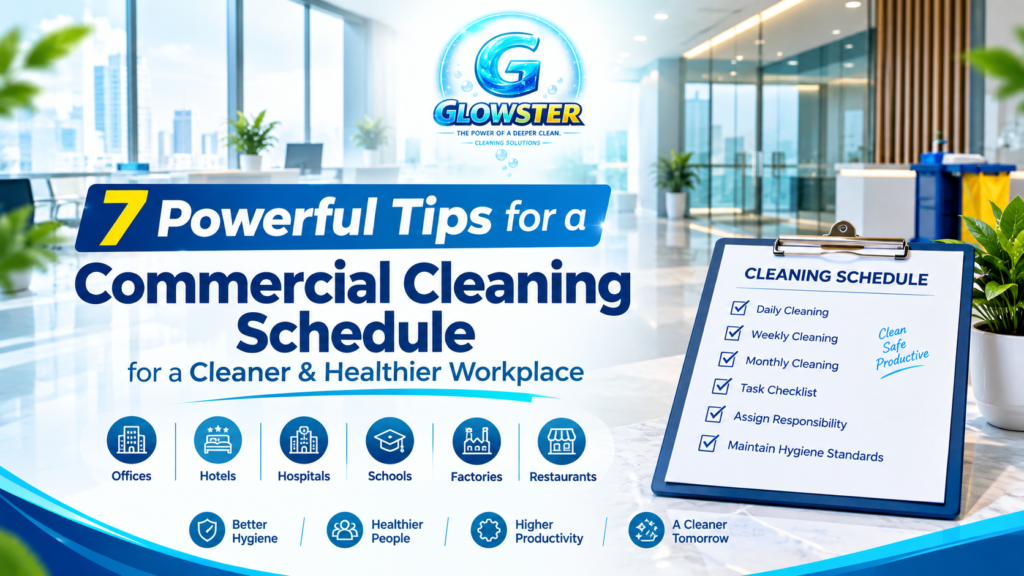
What Is a Commercial Cleaning Schedule?
A commercial cleaning schedule is a planned system that defines cleaning tasks according to frequency.
Instead of allowing housekeeping staff to clean randomly, a schedule divides cleaning activities into categories such as:
Daily Cleaning
commercial cleaning schedule
Tasks that need to be completed every working day or every shift.
Weekly Cleaning
commercial cleaning schedule
Tasks that may not be necessary every day but should be completed regularly.
Monthly Cleaning
commercial cleaning schedule
Deep-cleaning and maintenance activities that are performed periodically.
Periodic or As-Needed Cleaning
commercial cleaning schedule
Tasks triggered by spills, special events, heavy footfall, weather conditions or specific operational requirements.
This system is especially useful for facility managers handling large commercial properties.
Why Is a Commercial Cleaning Schedule Important?
A cleaning schedule creates consistency.
Without a defined schedule, some areas may be cleaned several times while other important areas may be neglected.
A structured commercial cleaning checklist helps housekeeping teams maintain a standard operating routine.
commercial cleaning schedule
1. Consistent Workplace Hygiene
commercial cleaning schedule
Regular cleaning helps maintain a cleaner environment for employees, visitors, customers and guests.
2. Better Housekeeping Management
commercial cleaning schedule
Facility managers can assign responsibilities instead of relying on verbal instructions.
3. Easier Monitoring
commercial cleaning schedule
A checklist or cleaning log makes it easier to verify whether tasks were completed.
4. Better Product Management
When cleaning tasks are standardized, managers can estimate the required quantity of:
- Floor cleaner
- Glass cleaner
- Washroom cleaner
- Handwash
- White phenyl
- Dishwash cleaner
- Degreaser
- Tile cleaner
- Other housekeeping supplies
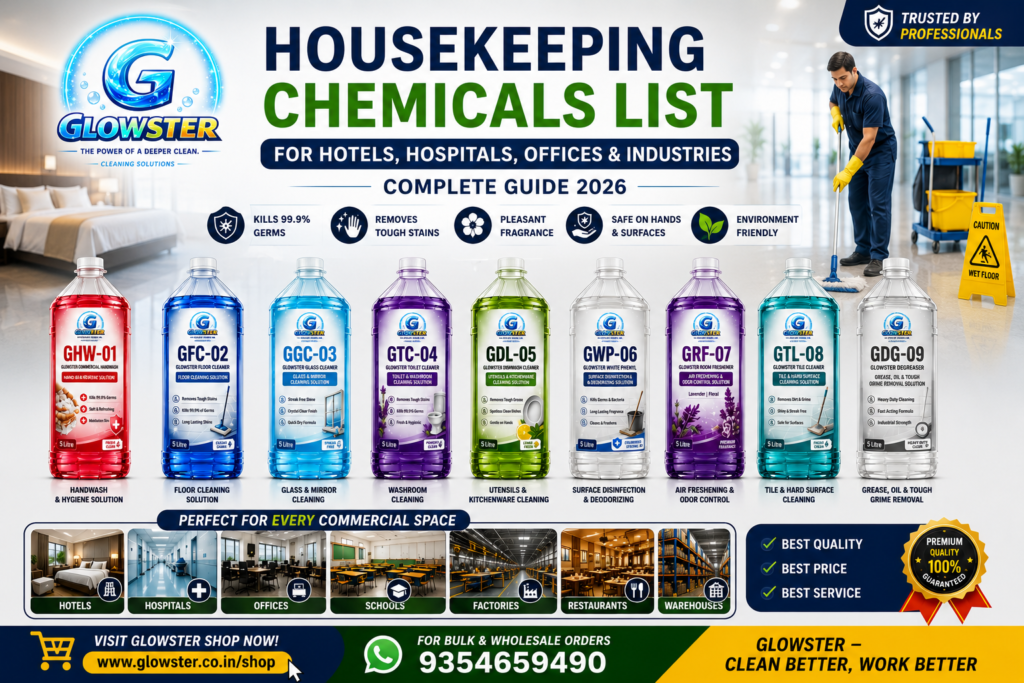
Glowster provides commercial cleaning products for offices, hotels, hospitals, schools, restaurants, warehouses and industries. commercial cleaning schedule
5. Improved Facility Appearance
Clean floors, glass, washrooms and common areas create a more professional environment.
commercial cleaning schedule
Daily Commercial Cleaning Checklist
Daily cleaning is the foundation of any commercial housekeeping program.
The exact frequency should be adjusted according to foot traffic, facility type and risk level. commercial cleaning schedule
1. Entrance and Reception Area
Clean: commercial cleaning schedule
- Entrance floor
- Door handles
- Reception desk
- Waiting area
- Glass doors
- High-touch surfaces
- Visible dust and dirt
High-traffic entrances may require multiple checks during the day. commercial cleaning schedule
2. Office and Work Areas
Daily office cleaning should include:
- Sweeping or vacuuming floors
- Mopping appropriate floors
- Emptying waste bins
- Cleaning frequently touched surfaces
- Cleaning visible dust
- Checking glass partitions
- Cleaning common equipment areas where appropriate
An office cleaning schedule should also include periodic cleaning of areas that are not visibly dirty but accumulate dust over time. commercial cleaning schedule
Internal Link:
Best Cleaning Products for Offices
Glowster’s existing office-cleaning guide covers products such as commercial handwash, floor cleaner, glass cleaner and washroom cleaner. commercial cleaning schedule
Daily Washroom Cleaning Checklist
Commercial washrooms should receive particular attention because they experience frequent use.
Daily tasks may include: commercial cleaning schedule
- Cleaning toilet bowls
- Cleaning urinals
- Cleaning washbasins
- Cleaning taps
- Cleaning mirrors
- Mopping floors
- Removing waste
- Checking odour
- Restocking handwash
- Checking toilet paper
- Checking water availability
- Cleaning high-touch points
For a suitable commercial washroom solution, see: commercial cleaning schedule
Internal Link:
Glowster GTC-04 Washroom Cleaning Solution
Glowster GTC-04 is listed for commercial and institutional washrooms including offices, hotels, hospitals, schools, factories and restaurants.
Daily Floor Cleaning Checklist
Floor cleaning frequency should depend on traffic and the type of facility.
High-Traffic Areas
Examples include:
- Entrances
- Corridors
- Reception areas
- Retail areas
- Hospital common areas
- Hotel lobbies
These may require multiple cleaning checks per day.
Standard Office Areas
Regular sweeping/vacuuming and mopping can be scheduled according to usage.
Industrial Areas
Factories and warehouses may require additional attention to:
- Dust
- Oil
- Grease
- Spills
- Material residues
OSHA’s general walking-working-surface standard emphasizes keeping workplaces, passageways and working surfaces clean and sanitary and keeping floors clean and, where feasible, dry.
Daily Glass & Surface Cleaning
Glass partitions, reception counters, doors and other visible surfaces should be inspected daily.
Clean visible:
- Fingerprints
- Dust
- Water marks
- Smudges
- Dirt
For high-visibility areas, regular glass cleaning contributes significantly to the overall appearance of a commercial facility.
Weekly Commercial Cleaning Checklist
Not every cleaning task needs to happen every day.
A weekly cleaning checklist can include deeper cleaning of areas that receive less frequent attention.
Weekly Tasks
- Deep mopping where required
- Detailed glass cleaning
- Cleaning corners and edges
- Cleaning behind movable furniture
- Dusting high surfaces
- Cleaning doors and frames
- Cleaning skirting areas
- Cleaning selected storage areas
- Detailed washroom cleaning
- Cleaning housekeeping equipment
- Checking chemical inventory
- Inspecting cleaning tools
Monthly Commercial Cleaning Checklist
A monthly cleaning schedule should focus on deep-cleaning and facility inspection.
Possible monthly tasks include:
- Deep cleaning floors
- Detailed cleaning of walls
- Cleaning high-level surfaces
- Cleaning difficult-to-reach areas
- Deep cleaning selected washroom areas
- Cleaning storage rooms
- Checking housekeeping equipment
- Reviewing cleaning chemical consumption
- Reviewing stock levels
- Inspecting cleaning logs
- Reviewing housekeeping performance
The exact frequency should always be adapted to the facility’s requirements.
Commercial Cleaning Schedule Template
Facility managers can use the following basic structure:
| Area | Task | Frequency | Responsible Person | Product/Equipment | Status |
|---|---|---|---|---|---|
| Reception | Floor cleaning | Daily | Housekeeping | Floor Cleaner | ☐ |
| Reception | Glass cleaning | Daily | Housekeeping | Glass Cleaner | ☐ |
| Office | Dusting | Daily | Housekeeping | Microfiber Cloth | ☐ |
| Office | Floor mopping | Daily | Housekeeping | Floor Cleaner | ☐ |
| Washroom | Toilet cleaning | Daily | Housekeeping | Washroom Cleaner | ☐ |
| Washroom | Handwash refill | Daily | Housekeeping | Commercial Handwash | ☐ |
| Pantry | Surface cleaning | Daily | Housekeeping | Suitable Cleaner | ☐ |
| Corridors | Floor cleaning | Daily | Housekeeping | Floor Cleaner | ☐ |
| Glass partitions | Detailed cleaning | Weekly | Housekeeping | Glass Cleaner | ☐ |
| High-level surfaces | Dusting | Weekly | Housekeeping | Duster | ☐ |
| Store room | Deep cleaning | Monthly | Supervisor | Suitable Cleaner | ☐ |
| Floors | Deep cleaning | Monthly | Housekeeping | Floor Care Products | ☐ |
This template can be modified according to the facility’s size and operational requirements.
Office Cleaning Schedule
A professional office cleaning schedule can be divided into four categories.
Morning
Before employees arrive:
- Reception cleaning
- Floor cleaning
- Washroom cleaning
- Waste removal
- Pantry cleaning
- High-touch surface inspection
During Working Hours
As required:
- Spill cleaning
- Washroom inspection
- Waste removal
- Reception maintenance
- High-traffic area cleaning
Evening
After working hours:
- Floor cleaning
- Desk-area cleaning according to workplace policy
- Waste collection
- Washroom cleaning
- Pantry cleaning
- Glass and visible-surface inspection
Weekly
- Detailed glass cleaning
- High-level dusting
- Corner cleaning
- Deep floor cleaning where required
Hotel Cleaning Schedule
Hotels require a more detailed housekeeping system because guest expectations are high.
Guest Rooms
Depending on occupancy and hotel policy:
- Floor cleaning
- Bathroom cleaning
- Mirror cleaning
- Surface cleaning
- Waste removal
- High-touch surface cleaning
- Replenishment of required supplies
Public Areas
Regular attention should be given to:
- Lobby
- Reception
- Corridors
- Elevators
- Public washrooms
- Restaurant areas
- Waiting areas
Deep Cleaning
Schedule periodic cleaning for:
- Carpets
- Upholstery
- High-level surfaces
- Hard-to-reach areas
- Detailed floor care
Hospital Cleaning Schedule
Healthcare facilities require a more controlled cleaning program.
WHO guidance emphasizes that healthcare environmental cleaning should be carried out by trained cleaners according to scheduled routines using appropriate cleaning agents and equipment.
A hospital cleaning program should consider:
- Patient areas
- Examination areas
- Washrooms
- Corridors
- Waiting areas
- High-touch surfaces
- Waste areas
- Staff areas
Cleaning frequency should be based on factors such as contamination risk, patient vulnerability and exposure risk.
Important: Healthcare facilities should follow applicable healthcare-specific infection prevention, environmental cleaning and regulatory protocols rather than relying on a generic commercial cleaning schedule.
Outbound Resource:
WHO – Environmental Cleaning and Infection Prevention
School Cleaning Schedule
Schools have classrooms, corridors, washrooms, staff rooms and common areas with significant daily foot traffic.
A school cleaning checklist can include:
Daily
- Classroom floors
- Desks and frequently touched surfaces
- Washrooms
- Corridors
- Entrance
- Drinking/water areas
- Waste bins
Weekly
- Windows and glass
- Fans and high-level dust
- Corners
- Storage areas
- Detailed washroom cleaning
Monthly
- Deep cleaning
- Furniture inspection
- High-level surfaces
- Store rooms
- Hard-to-reach areas
Factory & Warehouse Cleaning Schedule
Factories and warehouses require a different approach because cleaning can involve dust, grease, oil and large floor areas.
The cleaning schedule may include:
Daily
- Production floor inspection
- Spill removal
- Waste removal
- Walkway cleaning
- Washroom cleaning
- Staff hygiene areas
Weekly
- Detailed floor cleaning
- Equipment surroundings
- Corners and edges
- Storage areas
- Loading areas
Monthly
- Deep floor cleaning
- Difficult-to-reach areas
- Detailed housekeeping inspection
- Cleaning inventory review
Glowster already has a detailed guide for warehouse and factory cleaning products, including a factory cleaning schedule section.
Internal Link:
Cleaning Products for Warehouses & Factories
Restaurant Cleaning Schedule
Restaurants require strict attention to cleaning because food preparation and customer-facing areas have different requirements.
Daily
- Kitchen surfaces
- Dining tables
- Floors
- Washrooms
- Waste bins
- Door handles
- High-touch surfaces
Frequent/As Needed
- Spills
- Food residues
- Grease
- Customer areas
Weekly
- Detailed floor cleaning
- Storage area cleaning
- Equipment surroundings
- Walls and corners
Cleaning products must always be selected according to their intended use and applicable food-service hygiene requirements.
How to Assign Cleaning Responsibilities
A cleaning schedule works only when responsibilities are clearly assigned.
A facility manager can create four levels:
Housekeeping Staff
Responsible for routine cleaning tasks.
Housekeeping Supervisor
Responsible for inspection and task verification.
Facility Manager
Responsible for planning, inventory, vendor management and performance review.
Management
Responsible for reviewing overall facility hygiene standards and resources.
This creates accountability and makes it easier to identify missed tasks.
Cleaning Checklist vs Cleaning Schedule
These terms are related but not identical.
Cleaning Schedule
Defines when a task needs to be completed.
Example:
Washroom floor — Daily
Cleaning Checklist
Confirms whether the task has actually been completed.
Example:
Washroom floor cleaned — ✓
A professional facility should ideally use both.
How to Build an Effective Commercial Cleaning Schedule
Follow these steps:
Step 1: List Every Area
Make a complete list of:
- Offices
- Reception
- Washrooms
- Pantry
- Corridors
- Staircases
- Elevators
- Storage rooms
- Outdoor areas
- Production areas
Step 2: Classify Areas by Traffic
Divide areas into:
- High traffic
- Medium traffic
- Low traffic
High-traffic areas generally need more frequent inspection and cleaning.
Step 3: Identify the Cleaning Task
Specify exactly what needs to be done.
For example:
Floor → Sweep → Mop → Inspect
rather than simply writing “Clean floor.”
Step 4: Assign a Responsible Person
Every task should have an accountable person or team.
Step 5: Define Frequency
Use:
- Multiple times daily
- Daily
- Weekly
- Monthly
- As required
Step 6: Select the Appropriate Product
Use the correct cleaning chemical for the specific surface and application.
Step 7: Inspect and Record
The supervisor should verify completed work.
Cleaning Chemicals Required for a Commercial Facility
A commercial cleaning program may require different products for different applications.
Common categories include:
- Commercial handwash
- Floor cleaner
- Glass cleaner
- Washroom cleaner
- White phenyl
- Dishwash cleaner
- Tile cleaner
- Degreaser
- Room freshener
Glowster’s commercial product range includes cleaning and hygiene solutions designed for offices, hospitals, hotels, restaurants, educational institutions, factories and warehouses.
Internal Link:
View Glowster Commercial Cleaning Products
How Much Cleaning Chemical Should a Business Keep?
Avoid purchasing cleaning chemicals randomly.
A better approach is to track:
Monthly consumption = Opening stock + Purchases − Closing stock
After tracking consumption for several months, facility managers can establish an average monthly requirement.
Maintain a reasonable safety stock for essential products so that housekeeping operations do not stop because of stock shortages.
For businesses purchasing cleaning products in bulk, standardized packaging and regular inventory checks can simplify procurement.
How to Reduce Commercial Cleaning Costs
A good cleaning schedule can help reduce unnecessary expenditure.
1. Avoid Overuse of Chemicals
More chemical does not automatically mean better cleaning.
Follow product instructions.
2. Reduce Wastage
Use appropriate measuring systems where dilution is required.
3. Track Consumption
Record how much product is being used each month.
4. Standardize Products
Using suitable standardized products across multiple areas can simplify inventory management.
5. Buy According to Consumption
Bulk purchasing can be useful when the product has predictable consumption and adequate storage is available.
Cleaning Schedule for Greater Noida, Noida & Delhi NCR Businesses
Businesses in Greater Noida, Noida, Ghaziabad, Gurugram and Delhi NCR operate across offices, factories, hotels, warehouses, schools, hospitals and commercial buildings.
For these businesses, maintaining a consistent supply of commercial cleaning products and housekeeping supplies is an important part of facility management.
Glowster supplies commercial cleaning and hygiene products to businesses across Delhi NCR, with bulk supply support for commercial requirements.
Businesses can use a standardized cleaning schedule together with a reliable cleaning chemical supplier to improve procurement and housekeeping consistency.
Glowster – Commercial Cleaning Products for Professional Housekeeping
Glowster provides commercial cleaning and hygiene solutions for:
- Corporate offices
- Hospitals
- Hotels
- Schools
- Restaurants
- Factories
- Warehouses
- Retail stores
- Commercial buildings
- Facility management companies
The current Glowster product range includes solutions such as GHW-01 Commercial Handwash, GFC-02 Floor Cleaner, GGC-03 Glass Cleaner, GTC-04 Washroom Cleaning Solution, GDL-05 Dishwash Cleaner and GWP-06 White Phenyl.
Internal Link:
Explore Glowster Cleaning Products
Cleaning Chemicals, Housekeeping Supplies & Cleaning Products Wholesale
Glowster is your trusted cleaning products supplier in Greater Noida. We provide high-quality housekeeping supplies and cleaning chemicals at wholesale rates. Contact us for all your cleaning product needs.
For businesses that require regular cleaning supplies, choosing the right products and maintaining a planned cleaning schedule can make housekeeping operations more organized and consistent.
Whether you manage an office, hotel, hospital, school, factory, warehouse or restaurant, a documented commercial cleaning schedule can help your team maintain a cleaner, safer and more professional environment.
Frequently Asked Questions
How often should a commercial facility be cleaned?
There is no single frequency for every facility. High-traffic and high-touch areas may require more frequent cleaning, while low-use areas can follow weekly or monthly schedules.
What should be included in a commercial cleaning checklist?
A checklist should include the area, cleaning task, frequency, responsible person, cleaning product or equipment and completion status.
What is a daily cleaning checklist?
A daily cleaning checklist records routine tasks such as floor cleaning, washroom cleaning, waste removal, surface cleaning and high-touch-area inspection.
What is a weekly cleaning checklist?
A weekly checklist covers tasks that require deeper or less frequent cleaning, such as detailed glass cleaning, high-level dusting, corners, storage areas and selected deep-cleaning activities.
Conclusion
A professional commercial cleaning schedule turns housekeeping from an unplanned activity into a structured facility-management process.
The most effective schedule should identify:
What to clean → How to clean → How often → Which product to use → Who is responsible → Who verifies the task
Daily cleaning should focus on routine hygiene and high-traffic areas. Weekly cleaning should cover deeper maintenance tasks, while monthly cleaning can focus on detailed inspection and periodic deep cleaning.
For hospitals and other specialized facilities, cleaning schedules should follow applicable sector-specific procedures and requirements. WHO guidance specifically emphasizes scheduled cleaning, trained cleaners and appropriate cleaning agents in healthcare environments.
For businesses in Greater Noida, Noida, Ghaziabad, Gurugram and Delhi NCR, combining a well-planned housekeeping schedule with reliable commercial cleaning products, cleaning chemicals and housekeeping supplies can make facility operations more consistent and manageable.
Need bulk cleaning products for your business? Contact Glowster for commercial cleaning and hygiene solutions.
Recommended Internal Linking Structure
| Anchor Text | Internal URL |
|---|---|
| Best Cleaning Products for Offices | https://glowster.co.in/cleaning-tips/best-cleaning-products-for-offices/ |
| GTC-04 Washroom Cleaning Solution | https://glowster.co.in/product/gtc-04-washroom-cleaning-solution/ |
| Cleaning Products for Warehouses & Factories | https://glowster.co.in/cleaning-tips/cleaning-products-for-warehouses-and-factories/ |
| Glowster Commercial Cleaning Products | https://glowster.co.in/cleaning-products/ |
| Housekeeping Chemicals List | https://glowster.co.in/cleaning-tips/housekeeping-chemicals-list/ |
| Commercial Cleaning Products | https://glowster.co.in/cleaning-tips/commercial-cleaning-products-for-businesses/ |